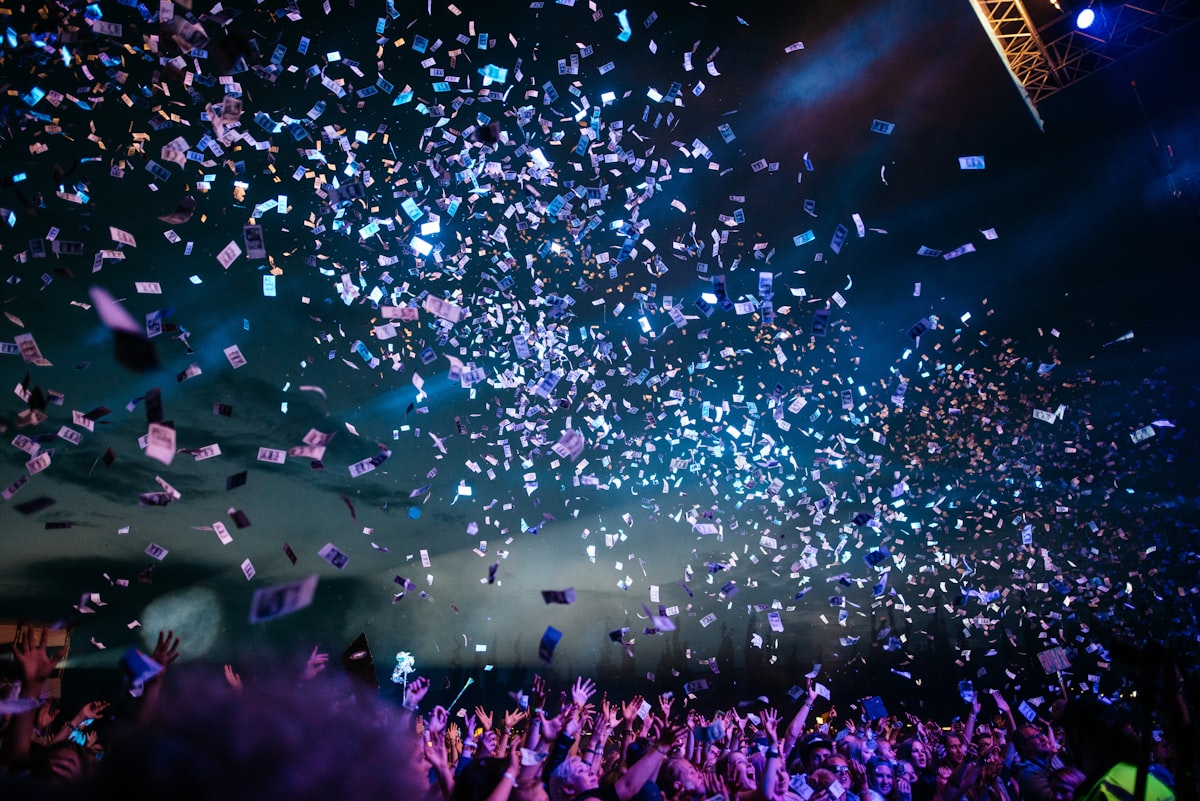
The terms EDM, rave, and music festival get used interchangeably, but they mean different things. If you are new to electronic music culture, understanding these distinctions will help you navigate the scene and know what to expect. This guide explains what each term means and how they are related.
EDM — Electronic Dance Music
EDM stands for Electronic Dance Music. It is a category of music defined by its production and sound characteristics, not by where you experience it.
What Makes Music "EDM"
Created with Electronic Instruments: EDM is made with synthesizers, drum machines, laptops, and other electronic gear, not acoustic instruments.
Designed for Dancing: The music has a strong, consistent beat (typically 120-150+ BPM) and rhythmic structure that encourages movement.
Emphasis on the Beat: Unlike some electronic music (ambient, experimental, IDM), EDM prioritizes rhythm and groove. The beat is the star.
Subgenres of EDM
EDM is incredibly diverse. House, techno, trance, dubstep, drum and bass, trap, and future bass are all subgenres of EDM. Each has its own sound, culture, and community. You can listen to EDM on Spotify, in your car, at home — location does not matter. EDM is just a type of music.
Rave — The Cultural Experience
A rave is an electronic music event, but more importantly, it is a cultural experience built on specific values and community.
What Defines a Rave
Electronic Music as the Center: Raves feature DJs or live electronic music performers. The music is the anchor.
Community and Culture: Raves are rooted in PLUR — Peace, Love, Unity, Respect. The culture is built on acceptance, inclusivity, and genuine connection. You are not just hearing music; you are joining a community.
Dancefloor Energy: Raves are about moving together. The dancefloor is sacred space where people from different backgrounds, styles, and beliefs come together for a shared experience.
Kandi and Ritual: Kandi bracelets (colorful beaded bracelets) are traded at raves as tokens of connection. The PLUR handshake is a ritual of unity.
Size and Scope
Raves range in size from small local club nights (50-200 people) to massive festival raves (20,000+). A small underground warehouse party and a major festival like EDC can both be "raves" in the cultural sense. What matters is the community and culture, not the size.
Rave vs. Club
A club might play electronic music, but if it is focused on alcohol sales and does not embrace rave culture or PLUR values, it is just a venue playing EDM. A rave, even if small and underground, has the cultural foundation and community.
Music Festival — The Large-Scale Event
A music festival is a multi-day or multi-stage event, usually featuring multiple DJs or live performers across different stages and genres.
What Defines a Music Festival
Multiple Artists and Stages: Festivals have many performers across different stages. You can see 10-30+ different artists across a weekend.
Extended Duration: Most festivals are at least two days and many run for three days or a full weekend. Some are single-day but with 10+ hours of programming.
Multi-Genre Lineups: While electronic music festivals focus on EDM, many festivals feature multiple genres. Coachella, for example, has rock, hip-hop, and electronic music.
Infrastructure and Experience Design: Festivals have camping, art installations, vendor areas, multiple food options, and production value. They are designed as immersive multi-day experiences, not just music delivery.
Scale: Festivals typically draw thousands of attendees (5,000 to 200,000+) and are major events in the music calendar.
Electronic Music Festivals
EDM festivals like Goldrush, Electric Daisy Carnival (EDC), Tomorrowland, and Lost Lands are festivals focused exclusively on electronic music. They feature multiple electronic music stages, subgenre-specific areas, and strong rave culture and PLUR values.
How They are Related
EDM is a type of music — you hear it in cars, at home, in clubs, at raves, and at festivals.
Raves are cultural events built on rave values that feature EDM. A rave can be a small club night or a huge festival.
Festivals are large-scale multi-day events that usually feature EDM and rave culture, but not always. Some festivals feature multiple genres.
Examples
EDM only: You listen to "Rave the Planet" podcast or a track from Underlux on Spotify at home. That is just EDM, no rave or festival.
EDM + Rave Culture: You attend a weekly underground warehouse party with 200 people dancing to local DJs, trading kandi, and embracing PLUR values. That is a rave. The music is EDM, the culture is rave.
EDM + Festival: You attend Goldrush with 20,000 people, multiple stages, camping, art installations, and a weekend of programming. That is an EDM festival — a specific type of rave that is also a festival.
What Kind of Experience Are You Looking For?
You want to listen to the music: Look for EDM playlists, podcasts like RDY VIP, or DJ mixes. You do not need a rave or festival.
You want community and dance culture: Look for local raves and club nights. These are more intimate, cheaper, and where you meet the real community. Start with the scene closest to you, like the Phoenix EDM scene.
You want a full-immersion experience with production and scale: A major festival is what you want. But be prepared: festivals are expensive, crowded, and intense. Go with the right expectations.
Key Terms
- EDM
- Electronic Dance Music — music created with electronic instruments and designed for dancing, characterized by a strong beat and rhythm.
- Rave
- An electronic music event rooted in PLUR culture, featuring DJs or live electronic music and a community built on peace, love, unity, and respect.
- Festival
- A large-scale, multi-day event featuring multiple artists across multiple stages, often with camping, art installations, and immersive experiences.
- EDM Festival
- A festival focused exclusively on electronic music, typically featuring rave culture and PLUR values (e.g., EDC, Tomorrowland, Goldrush).
- PLUR
- Peace, Love, Unity, Respect — the core philosophy of rave culture that shapes community behavior and values.
- Subgenre
- A category within a larger genre. House, techno, trance, and dubstep are all subgenres of EDM.