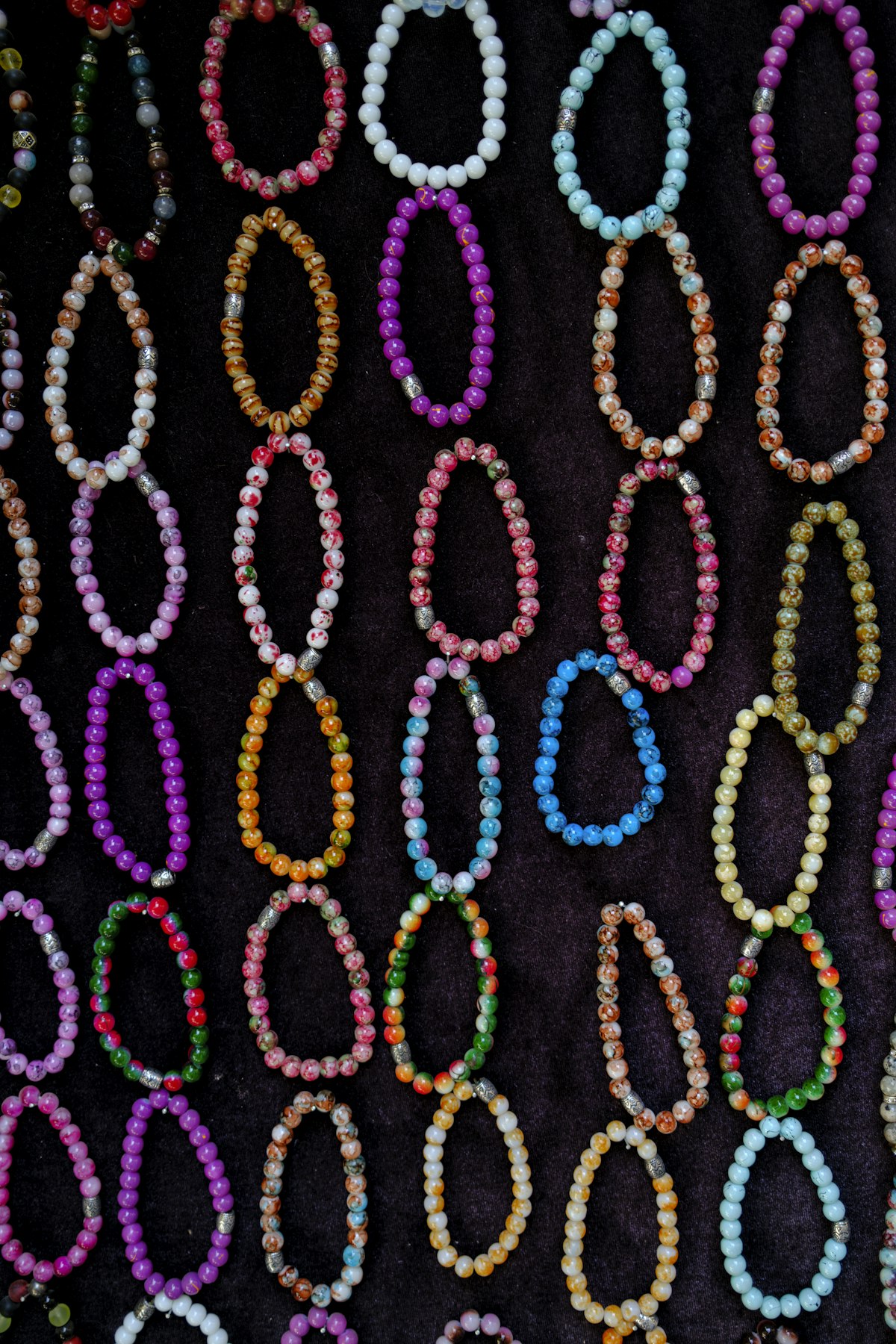
Kandi bracelets are a fundamental part of rave culture. These colorful beaded bracelets represent PLUR values and are traded between ravers as tokens of connection. Making kandi is easy, inexpensive, and meaningful. Whether you are attending your first rave or you are a veteran, homemade kandi adds personal meaning to your experience. This guide teaches you how to make kandi bracelets from scratch.
What You Need
Materials
Beads: Pony beads (the standard rave bead) are 6mm plastic beads. Buy a multi-color assortment pack from any craft store. They are cheap — usually $3-5 for hundreds of beads.
String: Use elastic cord (0.8mm or 1mm), embroidery floss, or nylon thread. Elastic cord is easiest for beginners because it stretches to fit different wrist sizes.
Scissors: Regular craft scissors work fine.
Optional but Helpful
Beading Needle: Makes threading easier but is not required.
Beading Mat: Keeps beads from rolling everywhere. You can use a towel or paper plate instead.
Bead Organizer: A small plastic compartment organizer keeps your beads sorted and makes picking colors easier.
Basic Single Strand Kandi
The simplest kandi is a single strand of beads strung on elastic cord.
Step 1: Cut Your String
Cut a piece of elastic cord about 7-8 inches long. This will wrap around a typical adult wrist with room to tie.
Step 2: Pick Your Color Pattern
Decide what colors you want. Simple patterns work best: alternating colors, repeating patterns (red-yellow-red-yellow), or color blocks (all red, then all blue, etc.). Write down your pattern so you do not mess up mid-way.
Step 3: String the Beads
Thread your elastic cord through the beads in your chosen pattern. Push beads firmly together as you go. The cord will stretch, so do not worry about tight spacing initially.
Step 4: Tie It Off
When your bracelet is at the right length, tie the elastic cord in a double knot. Trim the excess cord with scissors, leaving about 1/4 inch of tail.
Pro tip: Some ravers apply a dab of clear nail polish to the knot to keep it from coming untied. This is optional but helpful.
Advanced: Cuff Kandi
Cuff kandi are wider bracelets made from multiple strands of beads woven or braided together. These are more complex but look more impressive.
Three-Strand Braid
Cut three pieces of elastic cord, each about 8 inches long. String beads onto each strand in your chosen colors. Tie all three strands together at one end, then braid them like you are braiding hair. Tie the other end when done. This creates a wider cuff.
Loom Beading
For complex geometric patterns, consider a small bead loom (available for $15-30 online). Loom kandi is more time-intensive but allows for intricate designs.
Design Ideas and Inspiration
Check out Kandi Patterns for design inspiration and community submissions from other ravers.
Festival Names: Spell out your favorite festival name in beads (Goldrush, Tomorrowland, EDC). Each letter in a different color.
Artist Names: Make kandi with your favorite DJ or producer's name. This makes great trade material with fans of the same artist.
Pride and Identity: Use colors that represent your identity (pride flags, favorite color combinations). Kandi is self-expression.
Symbols: Create patterns that represent your values — geometric shapes, repeating motifs, or abstract designs.
Clear Beads with Glitter: Mix clear beads with glitter beads or glow-in-the-dark beads for visual interest.
Ombre Gradients: Gradually transition from dark to light shades of the same color for a gradient effect.
The Meaning of Trading Kandi
Trading kandi is a ritual moment. When two ravers trade kandi, they follow the PLUR handshake: touch fingers (Peace), interlock (Love), clasp hands (Unity), and slide a kandi from one wrist to the other (Respect). This moment is personal — both people are exchanging something they made with their own hands and connecting over shared values.
The best kandi trades happen between people who connected — maybe they danced together, shared water, or had a real conversation. The kandi becomes a physical token of that connection, something you wear and remember the person by.
Packing Kandi for Festivals
Make a variety of kandi in different colors and designs. Make more than you think you will need — people want to trade. Pack them in a small pouch or bag where they will not get crushed. Many ravers make 10-30 kandi before attending a festival.
Common Mistakes to Avoid
Knots Too Loose: If your knot is loose, the bracelet will fall apart. Tie it tightly and do not be afraid.
String Too Short: Measure against your wrist. A bracelet that is too tight will not stay on and will not fit others. Aim for about 1 inch of play after tying.
Beads Not Pushed Together: Leave gaps between beads and your kandi will look sloppy. Push beads firmly together as you go.
Overthinking the Design: Simple patterns look better than chaotic mixed-color jumbles. Stick to 2-4 colors and a repeating pattern.
Kandi as a Rave Tradition
Making kandi is your entry point into rave culture. It teaches you about the values of PLUR because you are creating something to exchange, to connect, to show respect. Every kandi you make is a small act of intentionality. That is what makes trading kandi at a rave so meaningful — it is not a mass-produced wristband, it is something a real person sat down and made for you.
Key Terms
- Kandi
- Colorful beaded bracelets, cuffs, and perler bead art handmade by ravers and traded at events as tokens of connection and PLUR values.
- Pony Bead
- A 6mm plastic bead, the standard bead size for rave kandi. Available in hundreds of colors.
- Elastic Cord
- A stretchy cord used to string kandi. Stretches to fit different wrist sizes and is easier for beginners than rigid string.
- PLUR Handshake
- The four-step ritual of trading kandi: touch fingers (Peace), interlock fingers (Love), clasp hands (Unity), and slide a kandi from one wrist to another (Respect).
- Cuff Kandi
- A wider bracelet made from multiple strands of beads braided or woven together, more complex than single-strand kandi.