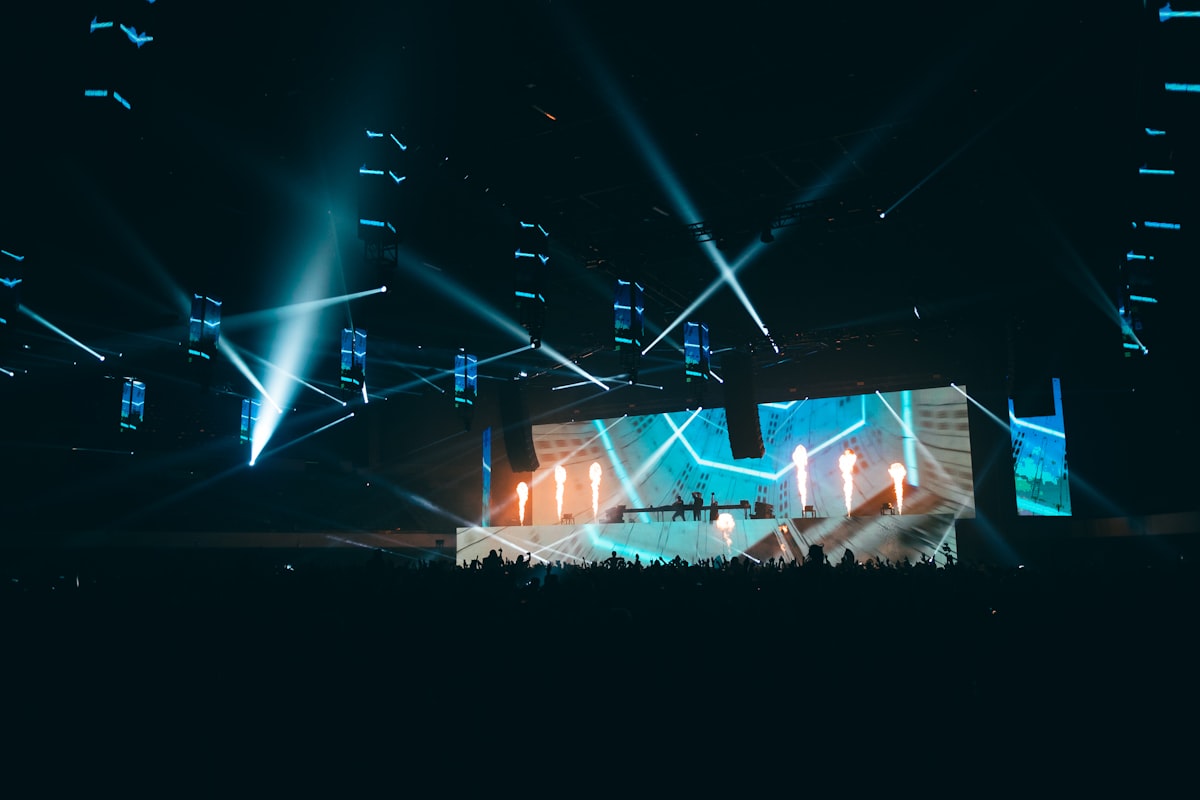
Electronic Dance Music (EDM) has become a global cultural force — from massive festival stages to underground warehouse parties, from Top 40 radio to YouTube mixes with billions of views. But for newcomers, the category can feel confusing. What exactly is EDM? How is it different from other electronic music? And why do people care so much about it? This guide breaks down EDM from first principles.
What is Electronic Dance Music?
Electronic Dance Music (EDM) is music made primarily with electronic instruments and digital production tools, designed to accompany dancing. That simple definition contains several key elements: it is created electronically (synthesizers, drum machines, samplers, computers), it is rhythmic and beat-driven (typically 120-150+ BPM), and it is designed for movement and the dance floor.
EDM distinguishes itself from other electronic music genres like ambient, IDM, or experimental electronic music by maintaining a focus on danceability and beat structure. A track is EDM if people can move to it in a sustained way; it is driven by rhythm, repetition, and the kind of build-and-release tension that makes your body want to respond.
A Brief History: From Disco to Now
EDM did not appear out of nowhere. Its roots run deep through decades of musical evolution.
Disco and Funk Foundations (1970s)
The lineage begins with disco, which prioritized the four-on-the-floor beat — a kick drum on every beat — designed for dancing. Disco producers like Giorgio Moroder pioneered the use of drum machines and synthesizers in pop music, creating the foundation that electronic dance music would build upon. Disco's emphasis on rhythm, repetition, and collective dancing became core to EDM's DNA.
House Music Emergence (1980s)
House music emerged in Chicago in the mid-1980s, building directly on disco foundations. DJs like Frankie Knuckles and Marshall Jefferson took disco drum tracks, stripped them down, and rebuilt them using synthesizers and drum machines like the Roland TR-808. House was faster, more repetitive, more futuristic — and it was explicitly designed for all-night dancing. The 4/4 kick, rolling basslines, and soulful samples became the house sound. House music spread to Detroit, where techno evolved into something colder, more industrial, more focused on machines than on soul.
Global Expansion and Subgenre Explosion (1990s-2000s)
By the 1990s, EDM had fractured into dozens of regional sounds. Trance emerged in Germany and the UK, taking house grooves and layering in sweeping melodic arpeggios and emotional breakdowns. Drum and bass pushed rhythm to extreme speeds (160-180 BPM), layering complex breakbeats over heavy bass. Dubstep took the bass emphasis further, creating tracks with explosive sub-bass drops. Hardstyle brought rock-influenced distortion to the four-on-the-floor beat. Each regional scene developed its own sound, and the variety only increased.
Mainstream Breakthrough (2010s-Present)
The 2010s saw EDM cross into mainstream consciousness. DJs like David Guetta, Calvin Harris, and Tiësto brought the sound to radio and Top 40. Major music festivals like Ultra, Electric Daisy Carnival (EDC), and Tomorrowland grew into multi-stage, multi-day experiences drawing hundreds of thousands. EDM became less of a subculture and more of a global industry. Today, EDM influences nearly every genre — pop artists collaborate with producers, hip-hop beats absorb electronic production, even country music has EDM crossovers. But the core remains: beat-driven music designed to move you.
Major EDM Genres and Subgenres
EDM is not monolithic. Here are the major categories and subgenres:
House and Deep House
House is the foundational EDM sound — 120-130 BPM, four-on-the-floor kick, repetitive grooves, soulful or funky elements. Deep house strips back some of the energy and focuses on atmospheric, jazzy, or soulful elements. House is the most accessible EDM entry point and remains dominant in clubs worldwide.
Techno
Minimalist, mechanical, hypnotic — techno strips away melody and focuses on texture, rhythm, and industrial sounds. 120-150 BPM, repetitive structures, often longer tracks (8-15 minutes) designed to take listeners on a journey. Techno is less about radio appeal and more about sustained immersion. It thrives in clubs and underground scenes.
Trance
Melodic, emotional, and euphoric — trance builds on house grooves but adds soaring synthesizers, big drops, and emotional arcs. 125-150 BPM, longer track lengths, and structures that take you up and down. Trance appeals to listeners who want emotional resonance alongside the beat. Progressive trance evolved as a slower, deeper variant (100-120 BPM) focused on building tension over many minutes.
Drum and Bass
Fast, complex, and energetic — drum and bass (DnB) operates at 160-180+ BPM with intricate breakbeats layered over heavy basslines. It originated in the UK in the early 1990s and split into liquid (smooth and jazzy), technical (complex polyrhythms), and neurofunk (dark and sci-fi influenced). DnB is more niche than house or trance but has a fiercely dedicated global following.
Dubstep and Bass Music
Heavy on the low end — dubstep emerged from the UK garage scene with an emphasis on sub-bass frequencies, syncopated rhythms, and dramatic drops. 140 BPM, wobbling basslines, and a half-time feel. It exploded globally in the late 2000s and influenced mainstream pop. Trap, future bass, and other bass-heavy styles grew from dubstep's foundation.
Hardstyle and Hard Dance
Aggressive and distorted — hardstyle combines four-on-the-floor house beats with distorted kick drums and rock/metal influences. 150-160 BPM, dark or industrial aesthetics, unapologetic heaviness. Popular in Europe and at festivals like Goldrush and Decadence AZ where Arizona audiences connect with the intensity. Hardcore is the more extreme variant (170+ BPM).
Future Bass and Trap
Modern and hybrid — future bass takes trap rhythms and adds lush, contemporary sound design. Trap brought hip-hop 808 drums to electronic music, influencing both EDM and mainstream rap. These genres blur the line between EDM and hip-hop.
EDM, Raves, and Festival Culture
You cannot discuss EDM without discussing rave culture. Raves and electronic music festivals are where EDM comes alive. They are not just concerts — they are communal experiences. Tens of thousands of people gather, often for 12+ hours, to experience music together. The culture emphasizes PLUR (Peace, Love, Unity, Respect), harm reduction, art, and collective transcendence.
Major festivals like EDC, Ultra, Tomorrowland, Coachella, and regional events like Goldrush in Arizona have become global pilgrimage sites. For many, attending a major festival is a life-changing event — not just for the music, but for the sense of belonging to a global community.
How to Start Discovering EDM
Listen to the Podcasts
Start with EDM podcasts that explore the culture and introduce the music. RDY VIP features long-form conversations with DJs and producers, giving you context for understanding the scene. A State of Trance is a great way to explore trance specifically, and other DJ podcasts showcase different subgenres.
Explore the Subgenres
You do not have to like all EDM. Start with the subgenre descriptions above and listen to a few iconic tracks from each. Do you vibe with the soulfulness of deep house? The transcendence of trance? The intensity of drum and bass or hardstyle? Once you find your lane, explore further.
Go to an Event
There is no substitute for experiencing EDM live. Start small — a local DJ night at a bar or club — before committing to a festival. Watch the community, feel the energy, understand why people love this. Read our festival safety guide and PLUR guide to go in informed and prepared.
Key Terms
- EDM (Electronic Dance Music)
- Music produced with electronic instruments and designed for dancing, characterized by a strong beat, repetitive rhythms, and a BPM range typically between 120-150.
- Four-on-the-Floor
- A drum pattern in which the kick drum hits on every beat of a 4/4 measure. It is the fundamental heartbeat of most EDM styles and originated in disco.
- Drop
- A moment in an EDM track where the bass or main melodic element suddenly enters after a buildup, often creating a dramatic moment designed to move the crowd.
- BPM (Beats Per Minute)
- The tempo of a track, measured by how many beats occur in one minute. Most EDM operates in the 120-180 BPM range, though some subgenres go much higher or lower.
- Rave
- An electronic music event, typically multi-hour or all-night, featuring multiple DJs, live performers, and immersive production. Raves emphasize community, collective experience, and PLUR values.